


Auto insurance for South Florida drivers

Heavy traffic, a high share of uninsured drivers and Florida’s no-fault rules make the right auto coverage more important here than almost anywhere. As an independent agency in Sunny Isles Beach, Alltrust compares coverage from multiple carriers and explains every option in plain terms.

Auto Insurance

Why South Florida drivers work with an independent agent

Auto insurance rates in Miami-Dade and Broward are among the highest in the country, and each carrier weighs your driving record, vehicles, ZIP code and household drivers differently. A captive agent can only show you one company’s price.

Alltrust is an independent agency. We quote your vehicles with multiple carriers, compare the coverage line by line, and help you decide which limits matter most. When your renewal goes up, we re-shop it instead of simply passing it along.

Why South Florida drivers work with an independent agent

What makes auto insurance different in South Florida

Florida laws and South Florida driving conditions create situations most drivers never think about until they have a claim. These are the topics we review with every client.

No-fault and PIP

Florida remains a no-fault state, so your own PIP pays first for your injuries no matter who caused the crash. Medical bills, lost wages, and related expenses start on your policy — which is why PIP limits and the 14-day treatment rule matter before you ever need them.

Uninsured drivers

Florida has one of the highest rates of uninsured drivers in the country, and injury liability limits can be thin. Stacked uninsured / underinsured motorist is often the coverage that actually pays if the other driver has little or nothing.

Comparative fault

Since 2023, Florida uses modified comparative negligence. If you are found more than 50% at fault, you can be barred from recovering from the other driver. Limits, UM, and how the crash is documented all change what a claim is worth.

Hurricanes and flooding

Vehicles flooded by storm surge, street flooding or king tides are covered only under comprehensive. Carriers usually stop adding coverage once a hurricane watch or warning is issued, so storm protection needs to be in place before a storm is named. If you keep a vehicle in South Florida during hurricane season, comprehensive is essential.

Luxury and exotic vehicles

High-value vehicles need more than a standard policy. Specialty and high-net-worth markets can agree stated value, better parts, and the deductibles that match how the car is actually used.

Seasonal residents

If you spend part of the year outside Florida, you still need to keep required coverage on a vehicle garaged here. We set the rating address, usage, and the months you actually drive so the policy stays valid.

SR-22 and FR-44 filings

After certain violations, the state requires your insurer to file proof of coverage. An SR-22 typically follows a suspension; an FR-44 is the higher-limit filing after a DUI. Not every carrier will file them, so the market has to be chosen before you need the form.

Ways to lower your auto premium

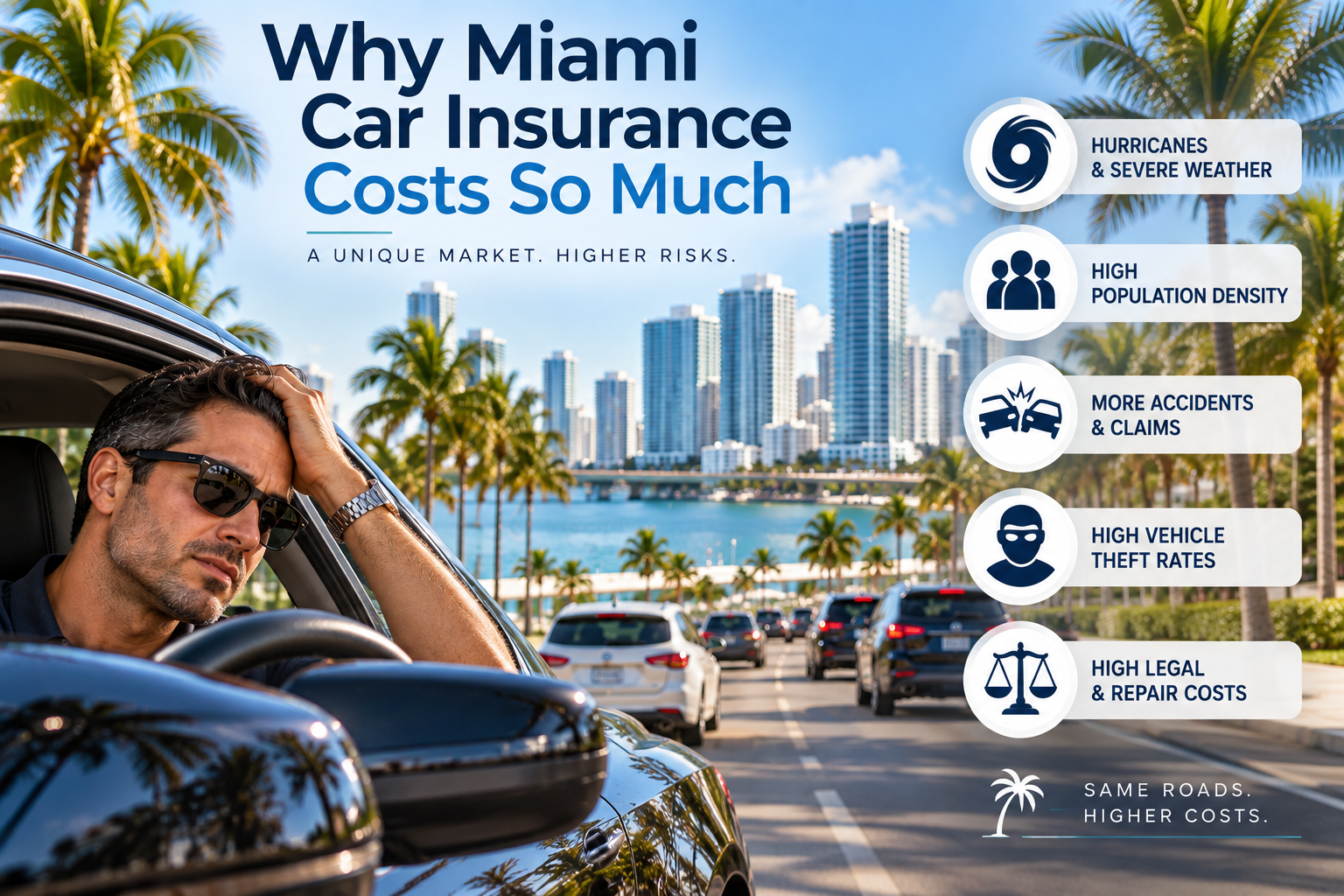
South Florida rates reflect real accident, litigation and theft trends, but several factors are within your control.

Placing your home, auto and umbrella with the right combination of carriers is one of the most reliable ways to save.

A higher comprehensive or collision deductible can drop the premium if you can comfortably pay that amount after a claim.

Tickets, at-fault accidents, and lapses stay on a Florida driving record for years. We quote the real record, then look for carriers that treat older incidents more kindly.

Usage-based programs can credit safe mileage and braking. They are not right for every driver; we only enroll you when the math works.

Good-student discounts, the right vehicle assignment, and the parent’s record all change a household rate more than a comparison site shows.

Installment fees add up. Paying the term in full, or choosing a carrier with a lower installment load, is a simple cut.

Alarms, tracking, and garage parking can matter in Miami-Dade and Broward, especially on higher-value cars.

Florida auto books move. We re-market the household at renewal instead of rolling the same price forward.

Ways to lower your auto premium

What Florida requires, and what you actually need

Florida’s legal minimums are among the lowest in the country. They keep your registration valid, but they leave you personally exposed after a serious accident.

Pays 80% of your reasonable medical expenses and 60% of lost wages after an accident, regardless of fault, up to the policy limit.

Pays for damage you cause to someone else’s vehicle or property, up to the $10,000 Florida minimum — often not enough in a serious crash.

Pays injuries you cause to other drivers, passengers and pedestrians, including legal defense. Florida does not require it, which is why so many drivers are underinsured.

Pays when the at-fault driver has no insurance, too little insurance, or is a hit-and-run. Stacked UM is often the coverage that actually pays in South Florida.

Auto insurance coverages explained

Every auto policy is built from the same set of coverages. Understanding each one makes it much easier to compare quotes from different carriers.

Bodily injury liability

Injuries you cause to other drivers, passengers and pedestrians, including legal defense. Shown as two limits, such as $100,000 per person and $300,000 per accident.

Request an auto quote
Auto insurance coverages explained

How getting a quote with Alltrust works

  1. 01

    Tell us about your drivers and vehicles

    Share the drivers in your household, your vehicles and your current coverage, or send your current declarations page.

  2. 02

    We shop the market

    We quote your household with the carriers actively underwriting Florida drivers and vehicles.

  3. 03

    Compare side by side

    You receive a clear comparison of limits, deductibles, coverages and price, with our recommendation.

  4. 04

    Bind and stay covered

    We issue your ID cards, coordinate with your lender or leasing company and review your coverage again at every renewal.

  • Current policy declarations page
  • Vehicle identification numbers (VINs)
  • Lienholder or leasing company information
  • Annual mileage for each vehicle
  • Driver’s license numbers for all household drivers
  • Where each vehicle is garaged
  • Accidents and violations in the last five years
  • Any required SR-22 or FR-44 filing

Coverage for everything else you drive

Alltrust also insures the other vehicles South Floridians rely on and enjoy, including motorcycles, boats and personal watercraft, golf carts, mopeds and scooters, RVs and trailers. For businesses, see our commercial auto insurance page.

Coverage for everything else you drive
Auto insurance across South Florida

Auto insurance across South Florida

From our office on Collins Avenue in Sunny Isles Beach, we insure drivers throughout Miami-Dade, Broward and Palm Beach counties, and across Florida.

  • Sunny Isles Beach
  • Aventura
  • Golden Beach
  • Bal Harbour
  • Miami Beach
  • North Miami Beach
  • Miami
  • Coral Gables
  • Homestead
  • Key Biscayne
  • Hallandale Beach
  • Hollywood
  • Fort Lauderdale
  • Weston
  • Boca Raton
  • Delray Beach

Auto insurance questions

Yes. Florida still requires Personal Injury Protection (PIP), and your own PIP pays first for your medical bills and lost wages after a crash regardless of who caused it. Related bills have been filed in recent legislative sessions, but none has become law, so PIP remains required today.

Florida requires PIP and property-damage liability. Bodily-injury liability is not required, but it is what pays the other person if you cause a crash. Full coverage (collision and comprehensive) is separate and is what pays for your own car — lenders almost always require it.

Yes. To keep PIP benefits, you generally must seek initial medical treatment within 14 days of the crash. Waiting longer can jeopardize the claim even if you were injured.

Non-stacked UM is a single limit for the household. Stacked UM multiplies that limit by the number of vehicles. In a metro area with a high uninsured rate, stacked UM is often the difference between a covered injury and a bill. We quote both so you can see the number.

Only comprehensive does. Storm surge, street flooding, a fallen tree, and glass from a named storm are comprehensive claims, not collision. Carriers typically stop adding comprehensive once a hurricane watch or warning is posted, so it has to be on the policy before the storm is named.

They are certificates your insurer files with the state to prove you carry the required liability. SR-22 is the usual filing after a suspension. FR-44 is the higher-limit filing after a DUI. Not every market will file them; we place the policy with a carrier that will.

Compare auto coverage for your household

Send us your current declarations page or a few details about your drivers and vehicles, and we’ll shop it across our carriers.